The PADI Open Water Hurghada course is the certification that lets you dive anywhere in the world to eighteen metres with a buddy and no instructor. It takes three to four days here, and the part most people want to know before booking is what those days actually contain and how hard the first one is.
What the course is
Open Water is the first real diving certification, and it is deliberately not difficult. There is theory you do at your own pace, five confined water sessions where you learn the skills somewhere shallow and calm, and four open water dives where you use them on a real reef.
The card at the end does not expire. You dive on it for the rest of your life, in Egypt, in Thailand, in a quarry in the country you live in, which is worth remembering when you compare the cost against a week of guided intro dives that certifies you for nothing.
The two ways we start it
The confined water part has to happen somewhere calm. We run it two ways, and the choice is yours rather than ours.
Neither option changes the certification, the number of dives or the standards. It changes what your first hour underwater feels like, and for a nervous beginner that is not a small thing.
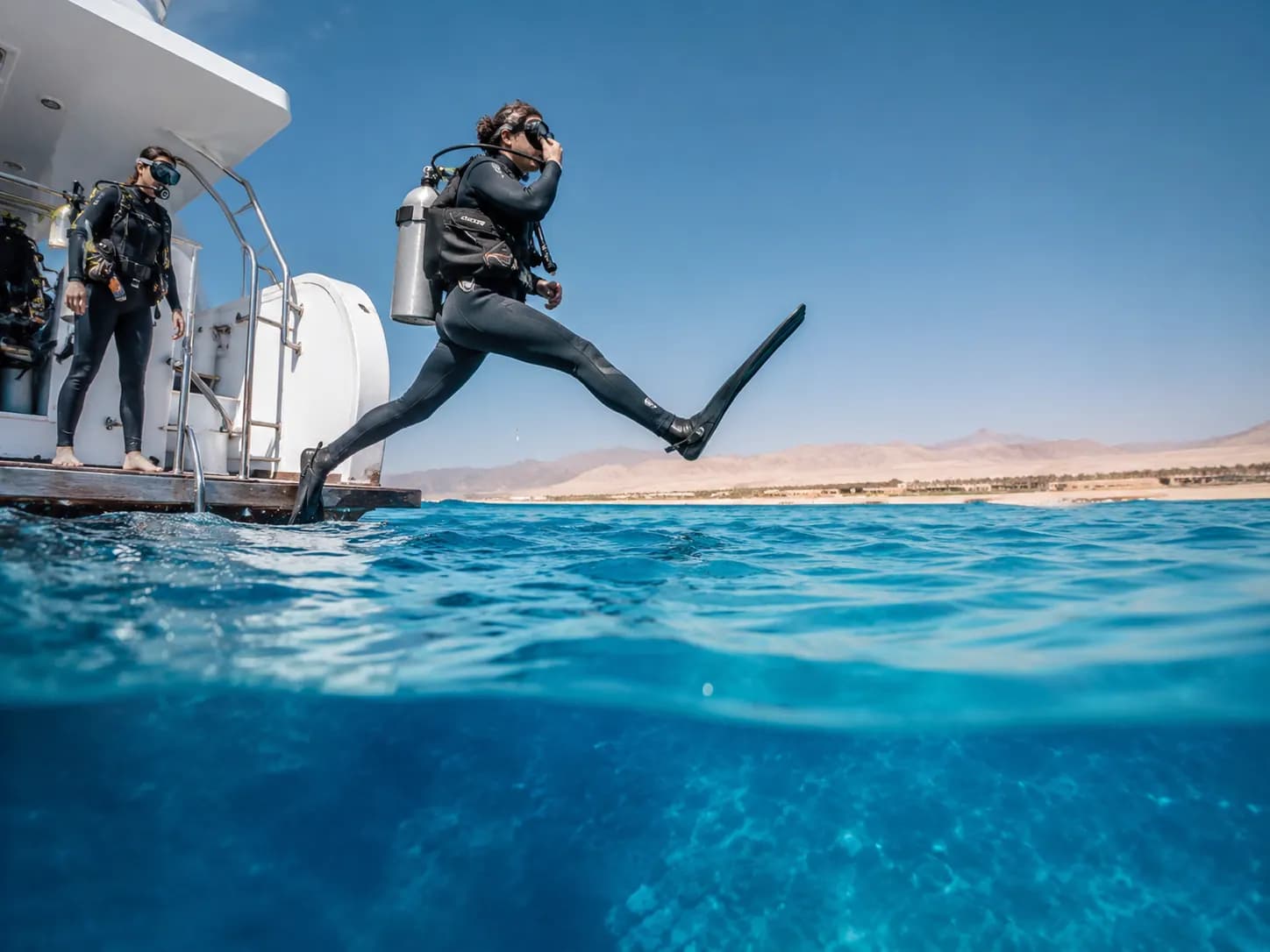
- Boat start: your first sessions are at shallow, sheltered Red Sea sites straight from the boat. You are in the sea from the beginning, which most confident swimmers prefer.
- Pool start: day one is in a heated hotel pool, and you move to the sea once the skills are done. It suits anyone who is unsure in open water or coming in the cooler months.
How the days run
Day one is theory and the first confined session, either in the pool or in the shallows. Day two finishes the confined skills and usually includes the first open water dive. Days three and four are the remaining open water dives, two a day, on real reefs with a proper briefing each time.
Most people finish in three days if the theory is done before arrival, and four if it is not. We would rather run it in four and have you enjoy it than compress it into a course you spend the whole time behind on.
What is included, and what is not
The course price covers your instructor, the full equipment, the tanks and weights, the training dives, the boat where the course runs from one, and the marine park fees. The group is small, because teaching six people to clear a mask is not teaching.
Three things are separate and we say so up front: the PADI e-learning material, the certification card, and dive insurance. Nobody likes finding that out at the desk, so it is written on the course page and on the price list too.
What you need before you start
The requirements are short and none of them are about fitness.
- Ten years old or more. Under fifteen certifies as a Junior Open Water Diver, which upgrades free of charge later.
- Able to swim. There is a two hundred metre swim and a ten minute float, neither of them timed.
- A medical form. If you tick yes to anything on it you need a doctor's sign off, which is easier to arrange at home than here.
- No diving in the twenty four hours before you fly home, so plan the course early in the holiday rather than late.
What comes after
Most people who certify with us dive the rest of the week as fun divers on the day boats, which is the point: you finish the course and immediately use it, with the same guides on the same reefs.
If you want to keep going, Advanced Open Water is the natural next step and it takes two days. It takes you to thirty metres, and the deep and navigation dives in it are the two that make the biggest difference to how comfortable you feel underwater.
Start where you are comfortable
Tell us whether you want the boat start or the heated pool start, and we will book the instructor and the days around your holiday.
Book Now